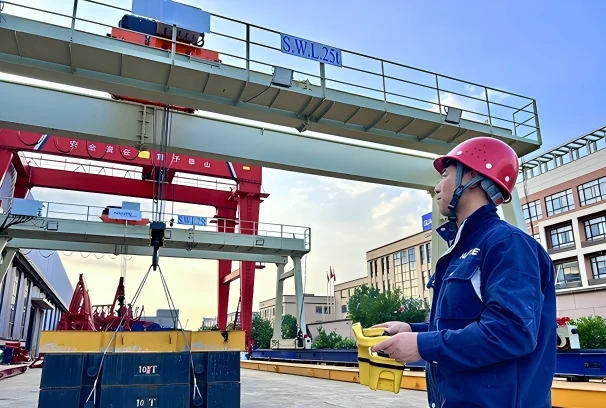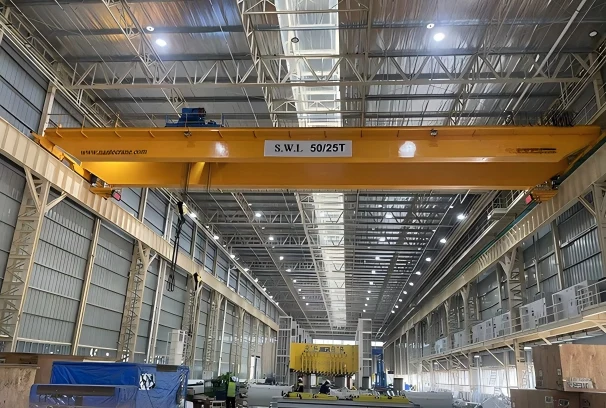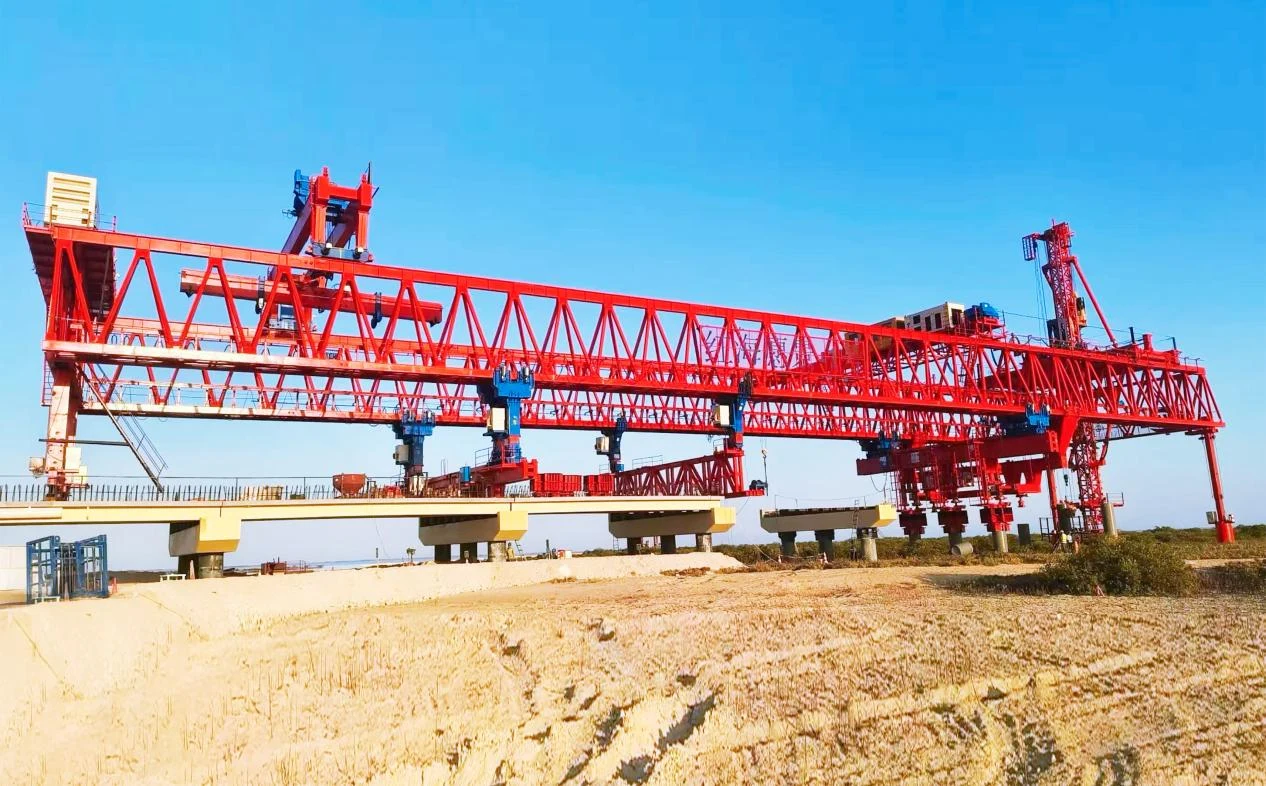






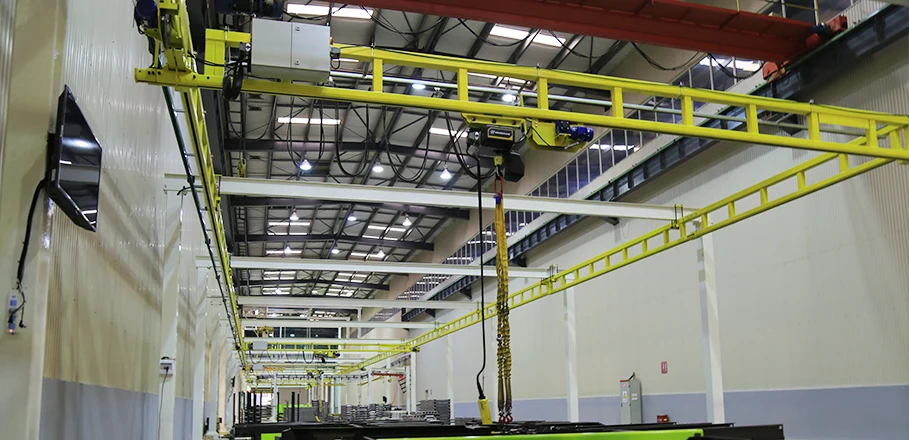
Electric wire rope hoists are widely used in factories, warehouses, construction sites, and various industrial lifting applications. Proper installation and routine maintenance are essential to ensure the safety, reliability, and long-term performance of the equipment.
This article provides a detailed guide covering key maintenance steps, installation requirements, and safety best practices for electric wire rope hoists.
1. Key Components and Working Principles
Wire rope hoists are composed of several major assemblies, including the lifting mechanism, transmission components, electric motor, brake system, and control devices.
Main characteristics include:
- Compact structure and high lifting efficiency
- High strength wire rope designed for long service life
- Double braking system for enhanced safety
- Smooth magnetic braking and stable torque control
- Lifting capacity typically ranges between 0.3–80 tons
- Lifting speed generally between 3–30 m/min, depending on model and configuration
Wire rope hoists come in different types such as:
- Single speed hoists
- Dual speed hoists
- Micro speed hoists
- Monorail hoists
- Electric winches
- Multi-function electric hoists
2. Pre-Installation Inspection
Before installing a new wire rope hoist, a thorough inspection must be conducted to ensure the equipment is in proper condition.
Check the following:
- The wire rope is correctly wound and free from damage
- The brake system operates normally
- The motor rotates smoothly without abnormal noise
- All connections are tight and secure
- Electrical insulation resistance complies with standards
For new wire ropes, perform a load test between 1.25× and 1.5× the rated load to verify lifting performance and stability.
3. Installation Requirements
During installation and commissioning, attention must be paid to alignment, load testing, and system calibration.
Key installation guidelines:
- Ensure the hoist is mounted on a level and secure beam
- Check all limit switches, including upper and lower travel limits
- Perform no-load testing before full load operation
- Inspect the mechanical and electrical systems for abnormalities
- Verify that all safety devices function properly
4. Safe Operation Practices
To ensure long-term reliability, operators must follow safe usage standards at all times.
Important safety rules:
- Never exceed the rated lifting capacity
- Avoid operating the hoist more than 120 cycles per hour
- Stop use immediately if abnormal noises or vibrations occur
- Maintain a safe distance between rope wrap and drum edge (≥50 mm)
- During lifting, avoid sudden starts or stops
- Never allow personnel to stand under lifted loads
- Always disconnect power before performing maintenance
5. Routine Maintenance Recommendations
Regular inspection and lubrication are essential for the safe and stable operation of electric wire rope hoists.
Maintenance checklist:
- Inspect wire ropes for wear, broken strands, or corrosion
- Check the condition of drums, pulleys, and hooks
- Test the brake system regularly to ensure timely response
- Clean and lubricate moving parts
- Replace worn components immediately
- Keep detailed maintenance records for safety audits
Conclusion
Electric wire rope hoists play a vital role in industrial lifting operations. Ensuring proper installation, following strict safety procedures, and conducting regular maintenance can significantly enhance equipment lifespan, improve workplace safety, and reduce unplanned downtime.
If you need customized lifting solutions or professional technical support, feel free to contact our engineering team.